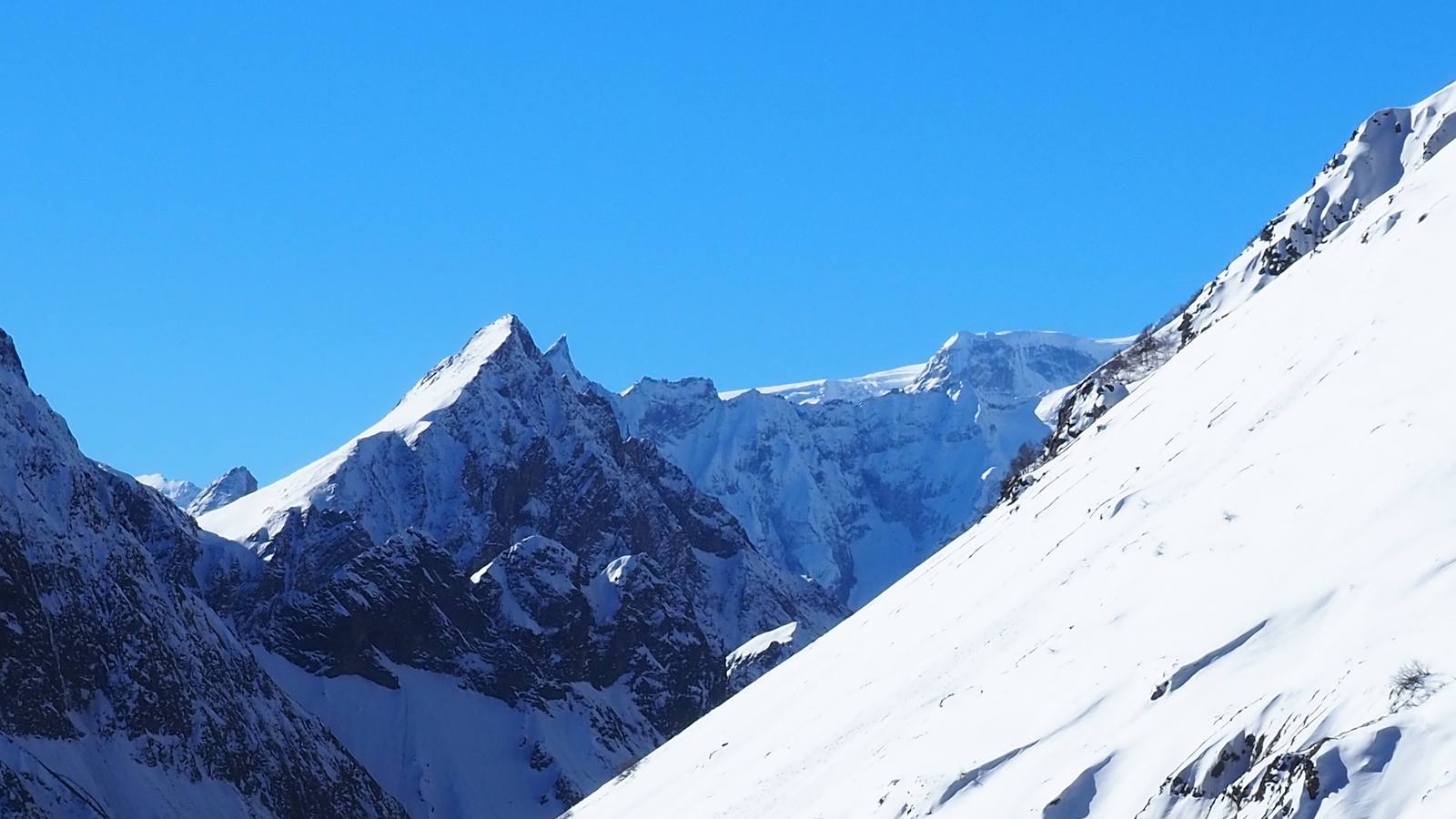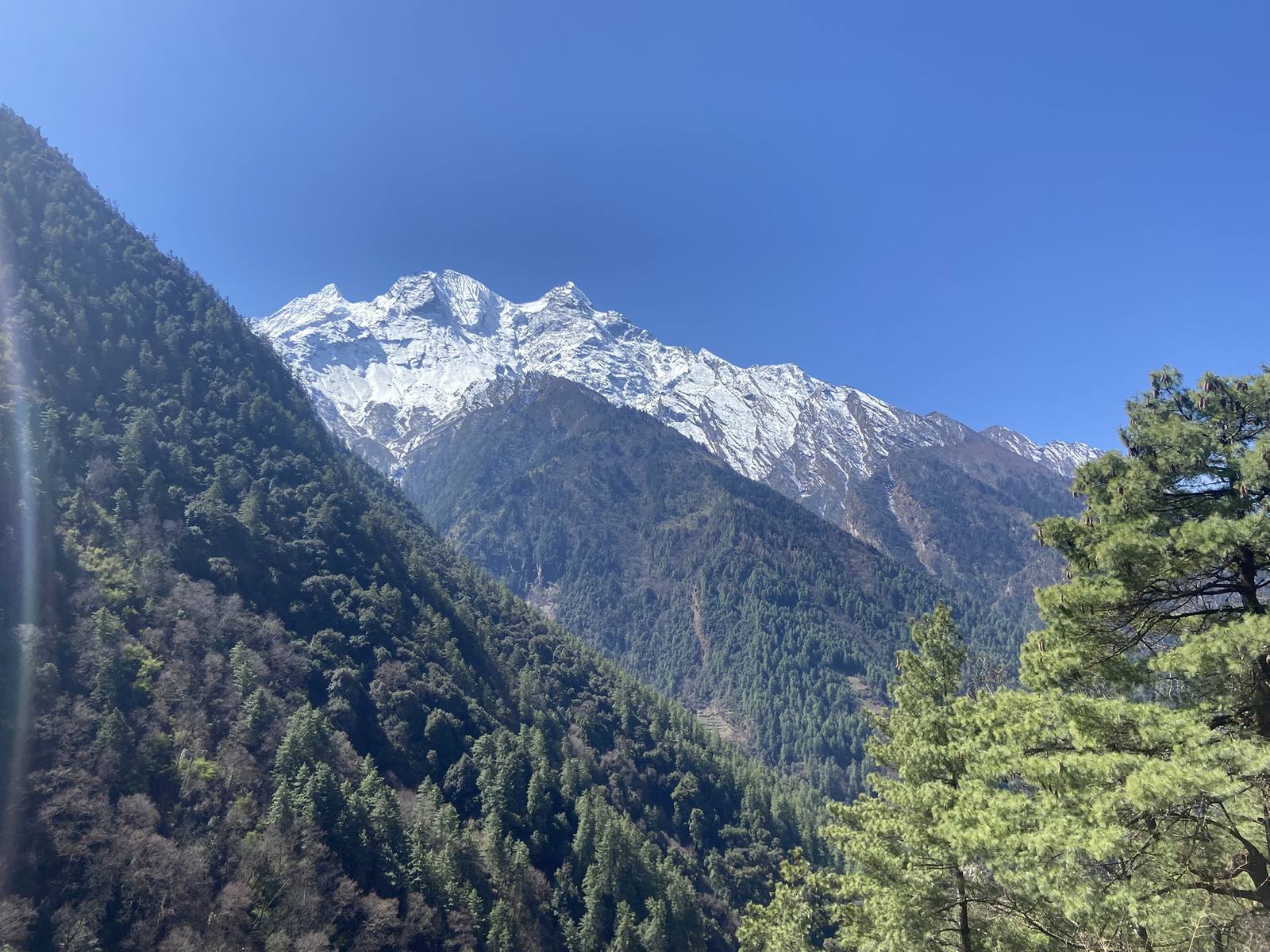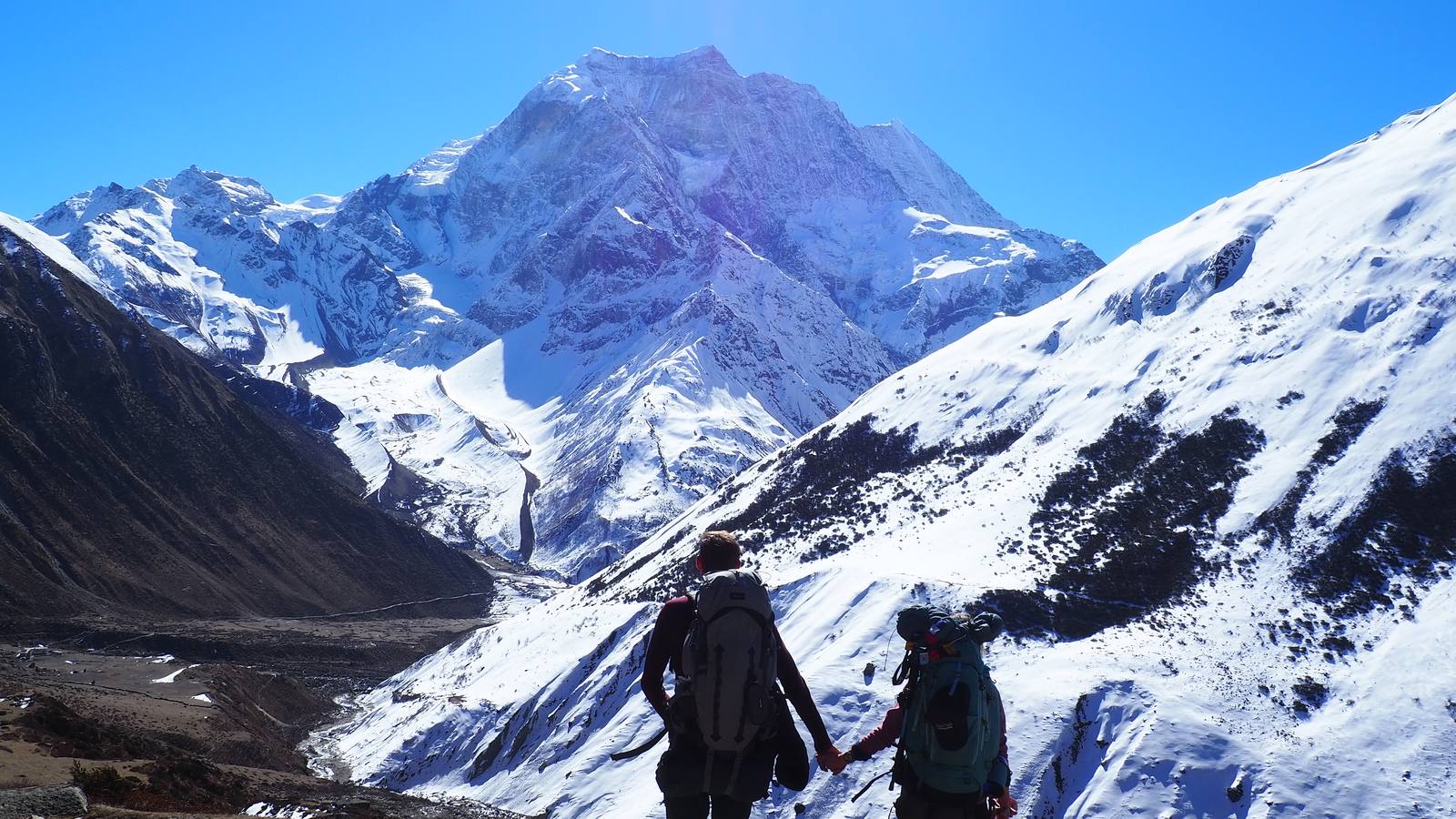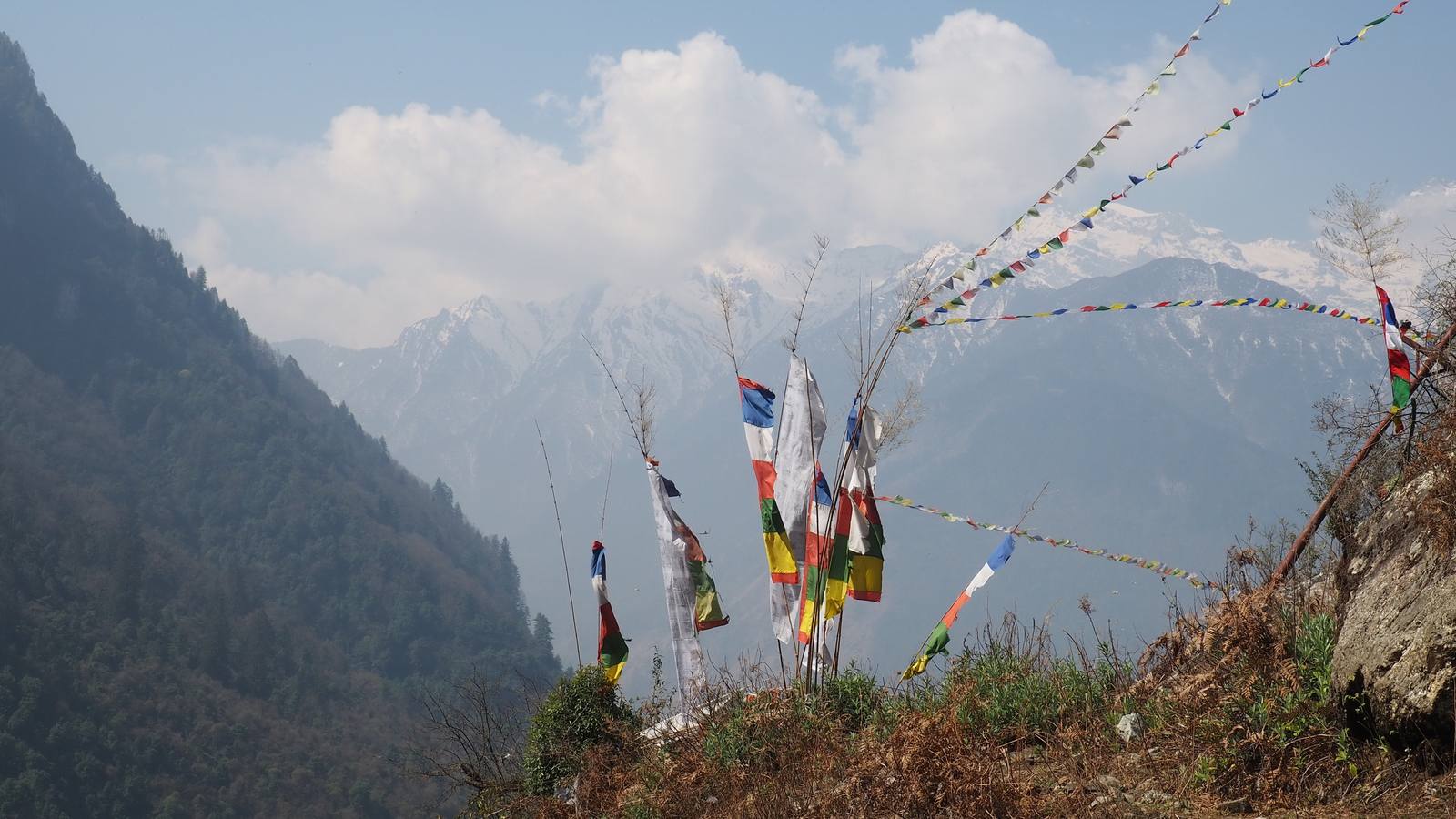
If you have a few days in Pokhara and want to see the Himalaya properly, this is the trek. It never goes above 3,210 m, the trail is well marked and well looked after, and on the third morning you watch the sun come up over Dhaulagiri, Annapurna South and Machhapuchhre from the top of Poon Hill.
It isn't a secret. Poon Hill is one of the most visited viewpoints in the country, and in October the top is crowded at dawn. Go in knowing that and you'll enjoy it more.
The route
On the first day you drive from Pokhara to Nayapul and climb the stone steps to Ulleri (2,070 m). The second day continues up through rhododendron and oak forest to Ghorepani (2,860 m), a village of lodges on a saddle in the hills.
On day three you get up in the dark and climb for about an hour to Poon Hill (3,210 m) for sunrise. Afterwards you come back down for breakfast and walk along the ridge to Tadapani (2,630 m), through forest with the mountains showing between the trees.
The last day drops down to Ghandruk (1,940 m), a large Gurung village of stone houses and slate roofs looking straight at Annapurna South, before the drive back to Pokhara.
What makes it different
The view is out of proportion to the effort. On most treks you earn the big panorama with a week of walking. Here it comes on day three, at an altitude where altitude sickness is rarely a problem. Dhaulagiri (8,167 m) is the seventh highest mountain in the world, and from Poon Hill you see the whole massif end to end.
It's lived-in country. This isn't wilderness. You walk through Magar and Gurung villages, past terraced fields and kids walking to school, in hills that have sent men to serve as Gurkha soldiers for generations. Ghandruk has a small Gurung museum that's worth half an hour of your afternoon.
It works for most of the year. Because it stays low, this is one of the few treks that's good in December and February too. Winter mornings are cold and very clear. In spring the forest turns red and pink with rhododendron, Nepal's national flower.
Before you book
Permits and the guide rule. The trek is inside the Annapurna Conservation Area, so you need its permit, and Nepal requires foreign trekkers in most conservation areas to walk with a licensed guide. Permits are included in the price.
Fitness. The hard part isn't the altitude, it's the stairs. The first two days are mostly steps up and the last day is mostly steps down. If you can walk five or six hours with breaks, you can do this. Trekking poles help your knees on the way down.
The sunrise crowd. In peak season a lot of people walk up Poon Hill at the same time. There's a viewing tower at the top and usually someone selling tea. Leaving a little earlier than everyone else gets you a better spot. If cloud comes in that morning, there's no second attempt on a four day trek, so if the sunrise matters a lot to you, ask your guide about an extra night in Ghorepani.
When to go. October and November give the clearest views. March and April have the rhododendrons. December and February are cold but often crisp and empty. The monsoon months are wet, leechy and cloudy.
Alone or in a group. You can book privately, including on your own, or join a group hike on dates that are already planned. On a group hike the price per person goes down as more people join, and earlier bookers are refunded the difference.
Who it suits, and who should pick something else
It suits first-timers, families with older children, anyone nervous about altitude, and people with a week in Nepal who don't want to spend all of it on a trail.
Pick something else if you want snow and glaciers under your feet. For that, the longer Annapurna Base Camp via Poon Hill adds the Sanctuary to this same route. If you'd rather have quieter trails and the mountains much closer, Mardi Himal is one more day and a big step up in views.
For a short trip with a guaranteed wow, though, there's no better four days in Nepal.