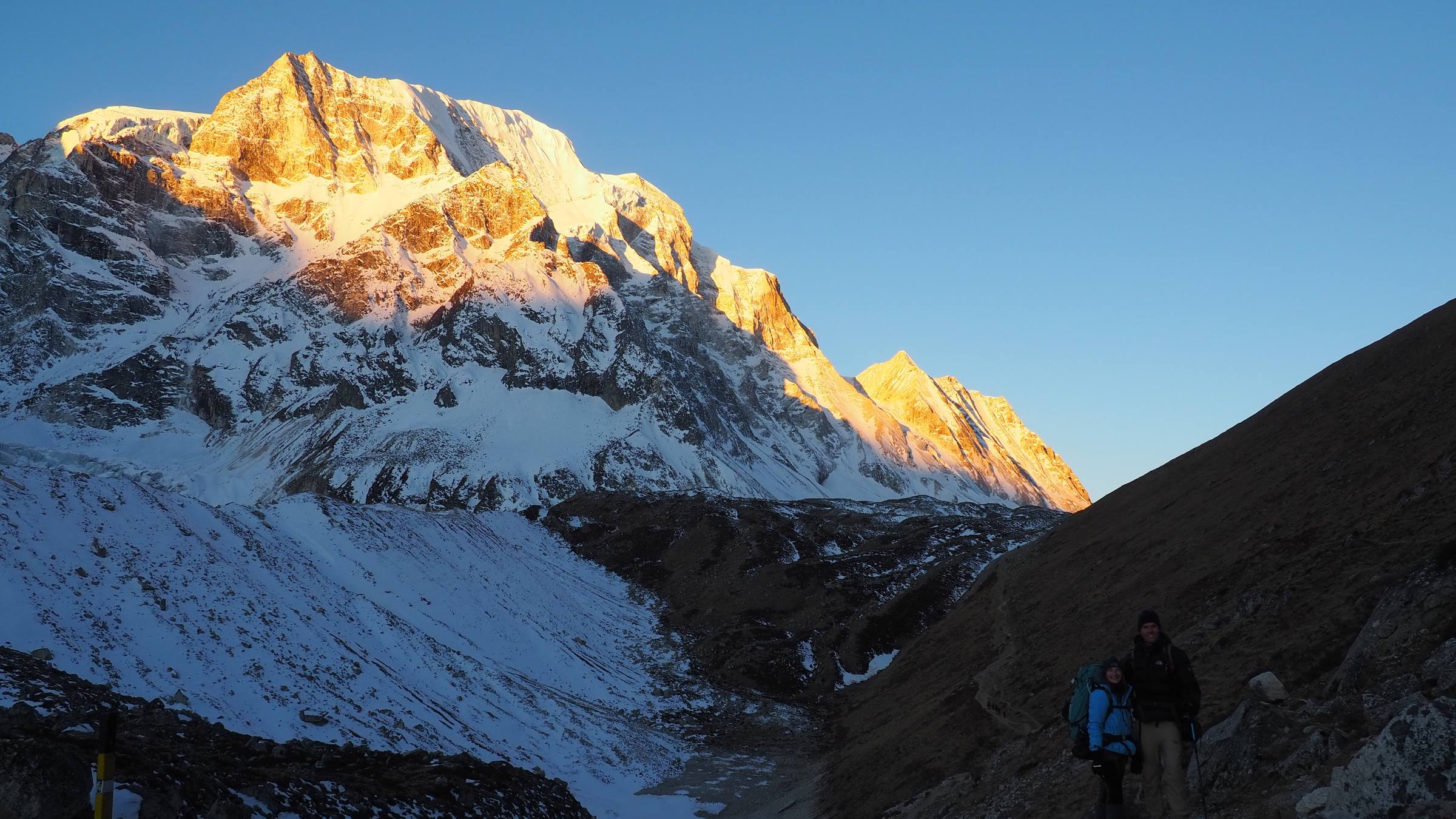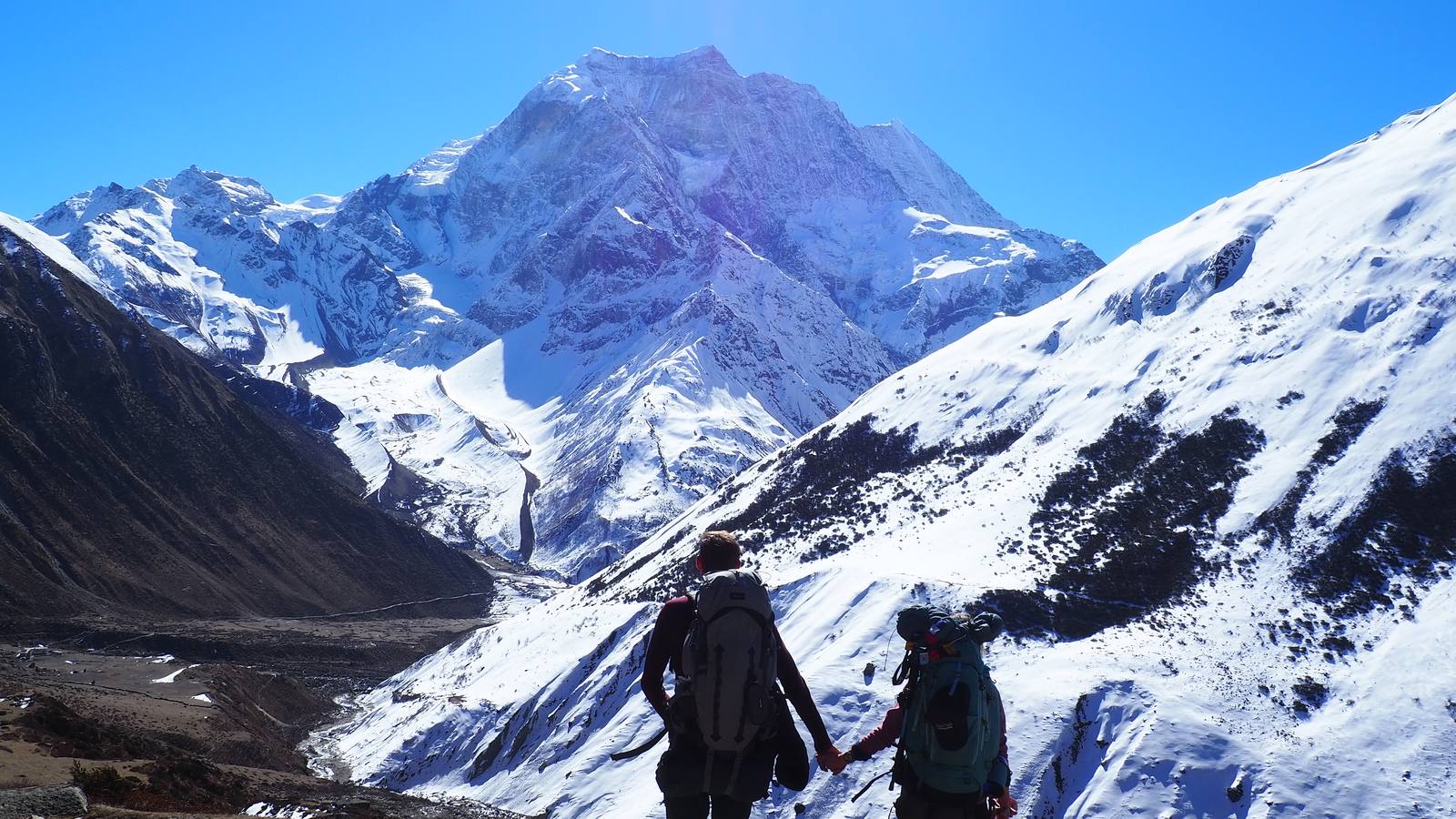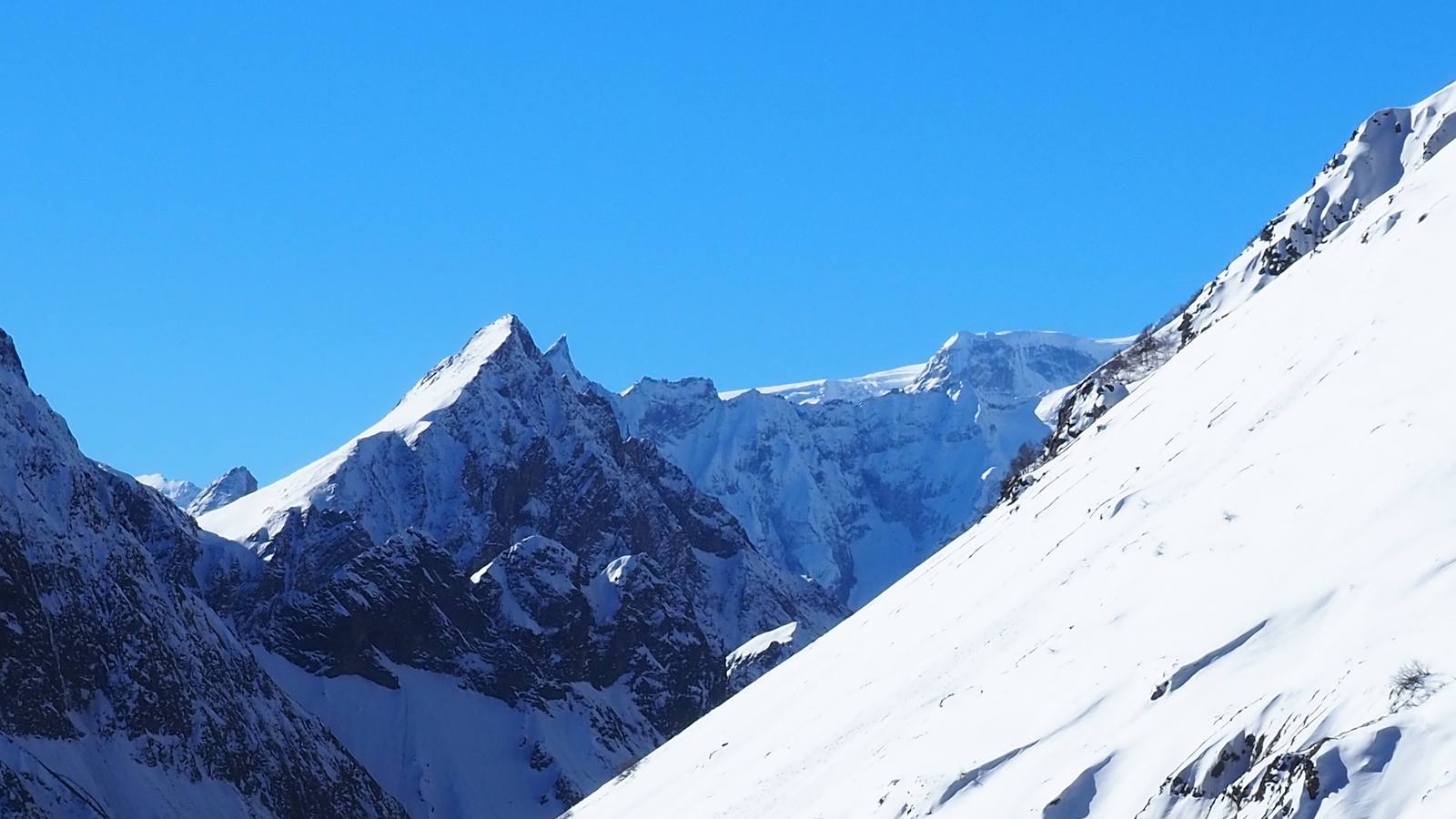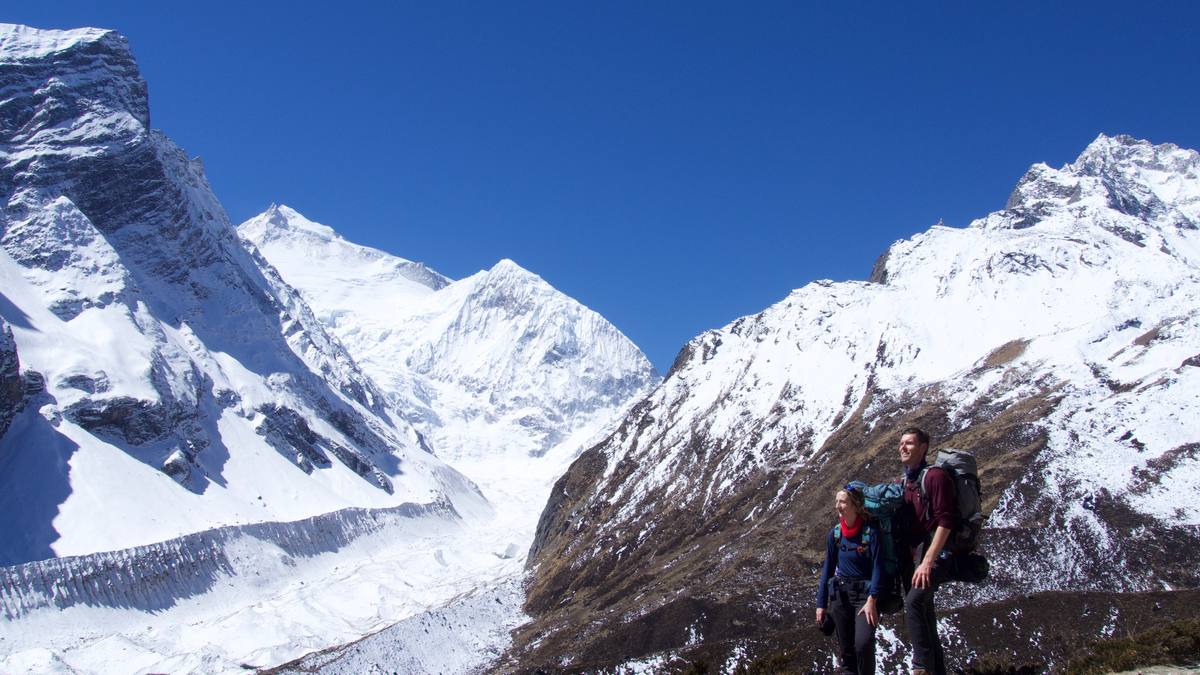
Langtang is the trek people overlook because it doesn't have Everest or Annapurna in its name. A day's drive north of Kathmandu, the valley climbs from river gorges and forest to wide yak pastures under Langtang Lirung, with glaciers hanging off the peaks on both sides.
It sits inside Langtang National Park, which in 1976 became Nepal's first Himalayan national park. It's also the valley with the hardest recent history. In April 2015 the earthquake set off a huge avalanche of ice and rock that buried the old Langtang village, and many people living and trekking there died. The village has been rebuilt beside the old site, and trekkers coming back has been a big part of how the valley recovered.
The route
You drive from Kathmandu to Syabrubesi (1,460 m), which takes most of a day on a rough mountain road. The first walking day follows the Langtang Khola upstream through forest to Lama Hotel (2,470 m). Look out for langur monkeys, and if you're very lucky, a red panda.
The next day you come out of the forest and the valley widens, until you reach Langtang village (3,430 m). From there it's a short day to Kyanjin Gompa (3,870 m), with a monastery, a yak cheese factory started with Swiss help in the 1950s, and glaciers on three sides.
The following morning you climb Kyanjin Ri (4,773 m) early, for the view straight onto Langtang Lirung and its icefalls, then come back to Kyanjin for the night. The last two days retrace the valley down to Syabrubesi, and you drive back to Kathmandu.
What makes it different
It's close to Kathmandu. No domestic flight, no trip to Pokhara. If you only have a week in Nepal, Langtang lets you spend most of it in the mountains.
The valley opens up. Upper Langtang is a wide, U-shaped glacial valley. Instead of climbing a gorge, you walk through yak pastures with the mountains spread out around you.
The people. The villages are home to Tamang and Tibetan-heritage families, and most lodges are family run. Staying in them is a direct way of supporting a valley that rebuilt itself after 2015.
Before you book
The drive. Honestly, it's the worst part of the trip: long, bumpy, and prone to landslides in the monsoon. Your transport is included, and your guide will know whether a jeep or bus makes more sense at the time.
Altitude. You sleep at 3,870 m on night four and climb to 4,773 m the next morning. Kyanjin Ri is a hard climb, so go slowly and turn back if you get a headache. If you want more, ask your guide about adding a day for Tserko Ri, which is higher and harder.
Permits and the guide rule. You need the Langtang National Park entry permit and a trekker registration card, and foreign trekkers must walk with a licensed guide. Permits are included in the price here.
When to go. March to May and October to November. Spring has rhododendrons in the lower forest. The monsoon makes the road and the lower trail risky.
Lodges. Simple, warm and family run. Hot showers and charging usually cost a little extra. Your guide brings a sleeping bag and down jacket for you.
Alone or in a group. You can book privately, even as one person, or join a group hike that's already planned. The price per person drops for everyone as a group hike fills up, and earlier bookers get the difference refunded.
Who it suits, and who should pick something else
Langtang suits people based in Kathmandu with a week to spare, anyone who wants real mountains and glaciers without flying, and trekkers who've done Poon Hill and want the next step up.
It's an out and back, so you walk the lower valley twice. If you'd rather walk a loop, the Annapurna Circuit or the Manaslu Circuit are the big options, though both need more time and fitness.
For a short trip with big scenery and a valley that genuinely benefits from your visit, Langtang is one of the best choices in Nepal.